
Mexican Los Angeles History in Interactive Maps.
https://esresources.org/storage/uploads/lesson-plan-picturing-mexican-los-angeles.pdf
PDF document
Open the documentAbout the resource
Lesson Summary
This one-day lesson guides students to investigate Mexican connections to and ownership of land in present-day Los Angeles before and after California became part of the United States. Students examine historical documents, primary sources, and an interactive map to trace changes in land ownership, use, boundaries, and control over time. Students consider how political and legal power shaped relationships to land in present-day Los Angeles, and how historical records influence what is remembered and what can be claimed. Students begin by examining a nineteenth-century diseño of Rancho La Cienega o Paso de la Tijera, a hand-drawn map showing the approximate boundaries and geographic features of a Mexican land grant received by Vicente Sánchez in 1843 under Mexican law.
The lesson provides historical context about the Indigenous, Spanish, Mexican, and U.S. periods of California history and introduces the political transition that followed the U.S. acquisition of present-day California. Students then independently explore the Picturing Mexican America interactive map using historical documents connected to locations across present-day Los Angeles.
By examining and comparing multiple locations, students trace what happened to Mexican-owned land over time and use evidence to develop conclusions about land, power, memory, and belonging in Los Angeles.
What's Included?
Slide Deck on Historical Context: Mexican land grants and the transition from Mexican to U.S. rule of Western regions (1821-1848, with optional extensions before Spanish rule and into present-day).
Primary Source: Diseño of Rancho La Cienega o Paso de la Tijera, c. 1844 — a hand-drawn map used to show the approximate boundaries and important features of a Mexican land grant.
Picturing Mexican America Interactive Map for students to investigate Mexican land ownership across 19th-century Los Angeles — from “Picturing Mexican America,” a digital humanities project designed and run by UCLA Professor of English and Chicana/o and Central American Studies, Dr. Marissa López, in collaboration with the LA Public Library.
Student Handout, including Close Reading and Spatial Analysis Questions; Complex Thinking Prompts; and Evidence-Based Reflection.
Extended Enrichment — Optional Extension Activities.
Historical Inquiry Guiding Question
How did land ownership change after California became part of the United States, and what does the history of legal and political transition of land ownership in Los Angeles reveal about the continuity and changes in peoples’ relationship to a land?
Ethnic Studies Guiding Questions
Whose presence or relationship to land is remembered or made invisible under different historical circumstances?
What does it mean to “claim” land? Do people have power over land?
What does it require to recover local history, and how might doing so change the way we understand land rights, cultural, political, or social belonging, national memory, and historical evidence?
How does change over time affect people's relationships to a place?
How might learning the Mexican history of Los Angeles change the way we understand who belongs in the city today?
When the United States acquired present-day California, Mexican land grants did not automatically disappear, but landowners had to go through the U.S. legal system to have their ownership recognized. Vicente Sánchez died in 1846, during the transition from Mexican to U.S. control of California. He did not live to see how his land grant would be treated under the new U.S. government. After his death, his grandson, Tomás A. Sánchez, became one of the heirs. In 1852, Tomás and the other claimants filed a claim with the U.S. government to establish their ownership of Rancho La Cienega o Paso de la Tijera. The Sánchez family had to have their Mexican land grant recognized through the U.S. legal system. Their claim was reviewed and confirmed in several stages before the U.S. government formally issued them a land patent. In 1873, after more than two decades of proceedings under U.S. law, the rancho was finally patented to Tomás Sánchez. Two years later, in 1875, Sánchez and his wife sold nearly 3,700 acres of Rancho La Cienega o Paso de la Tijera to four Los Angeles businessmen. The historical record tells us when and to whom Sánchez sold the land, but it does not clearly tell us why he decided to sell.
Additional Curricula 08
-
New
-
Liberty and Narrative, Then and Now
-
Reading Revolution Through Song
-
Annotate Primary Sources Like an Expert
-
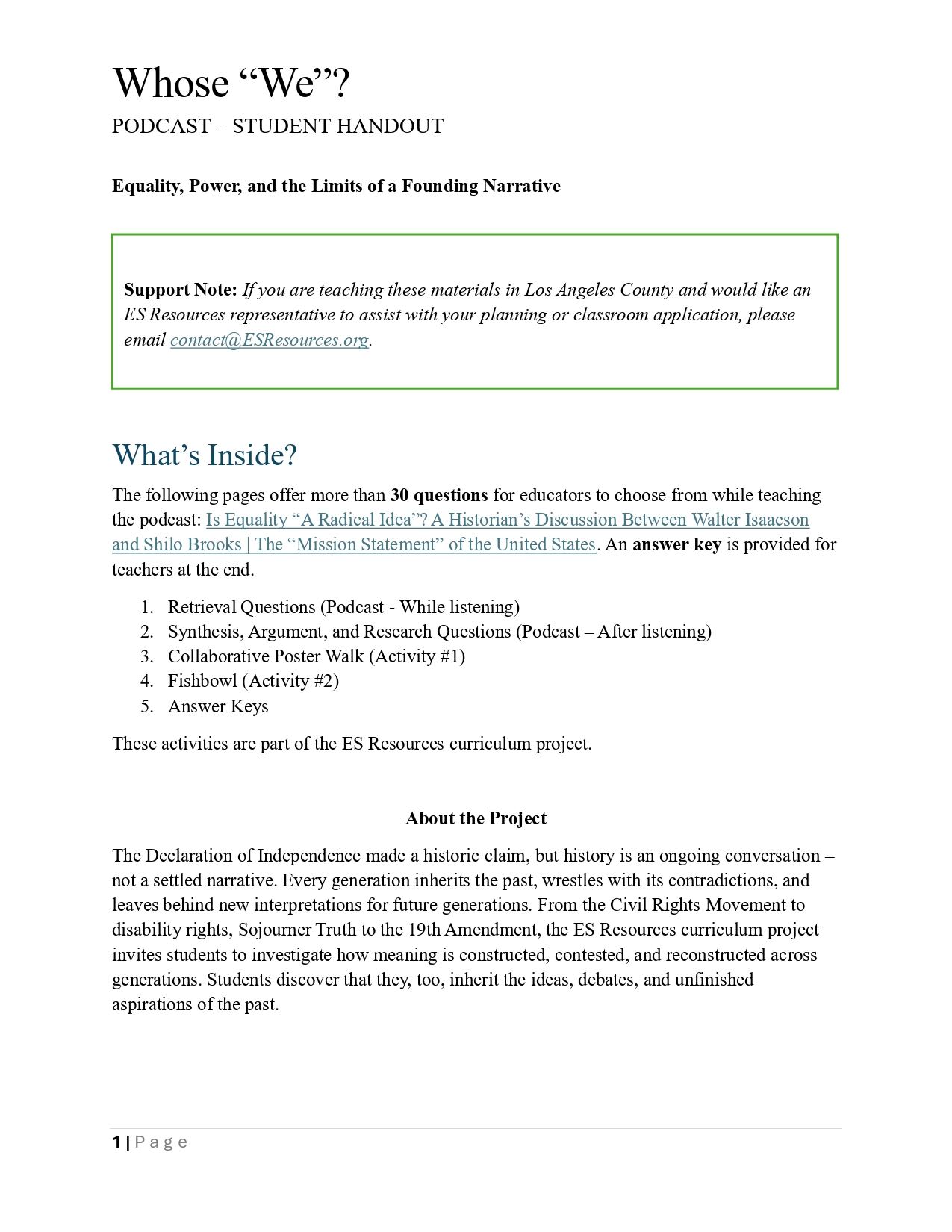
Whose “We”? The Limits of a Founding Narrative
-
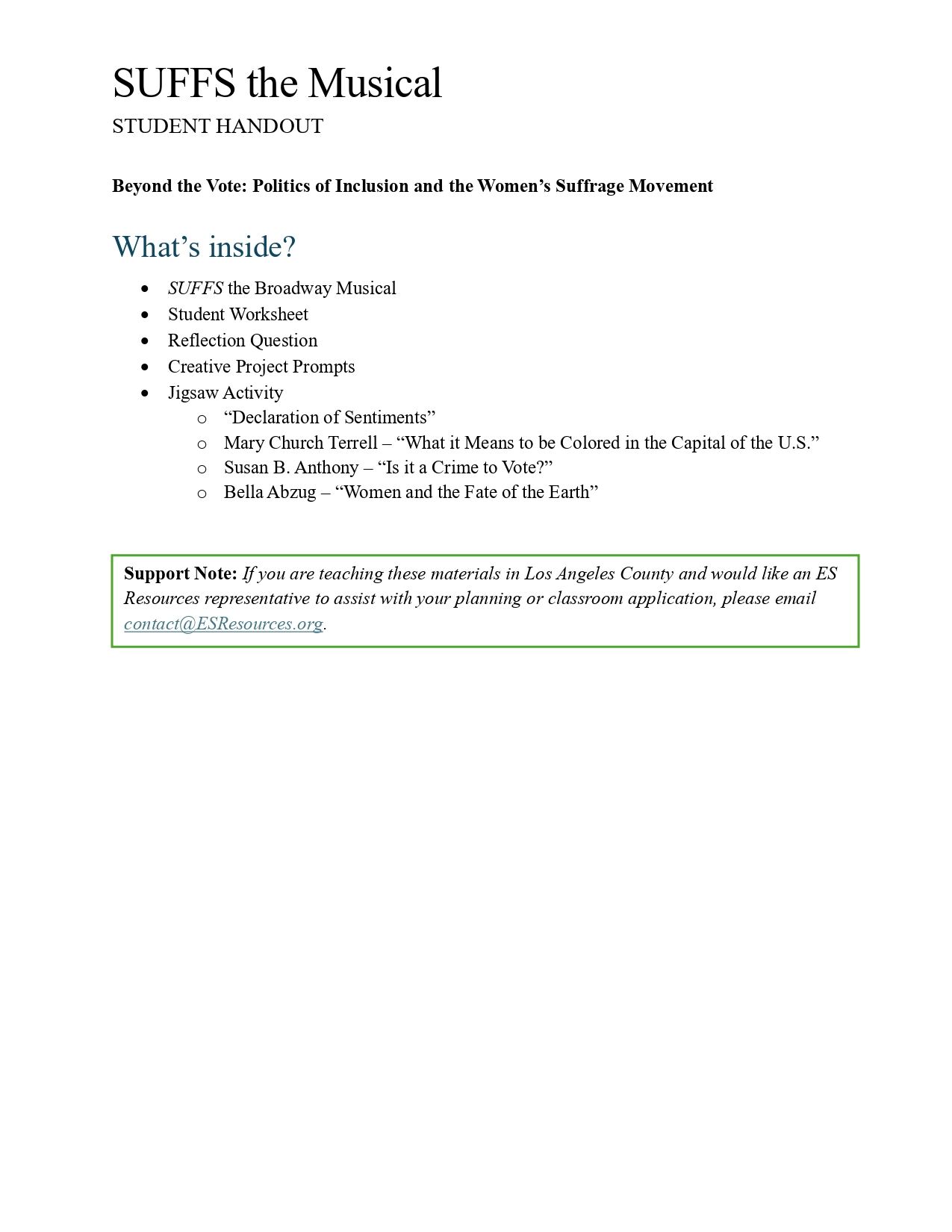
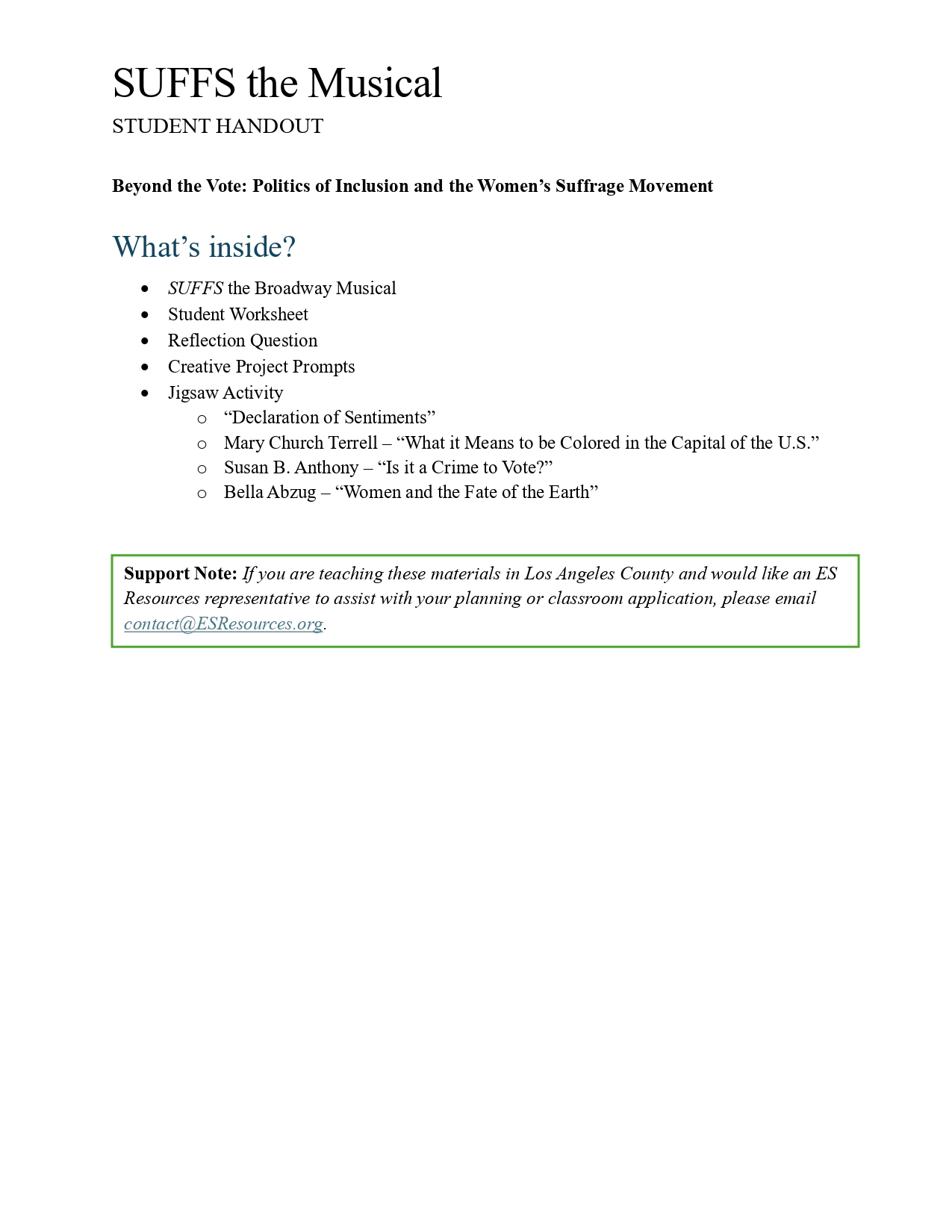
Women’s Suffrage: Politics of Inclusion & SUFFS the Musical
-
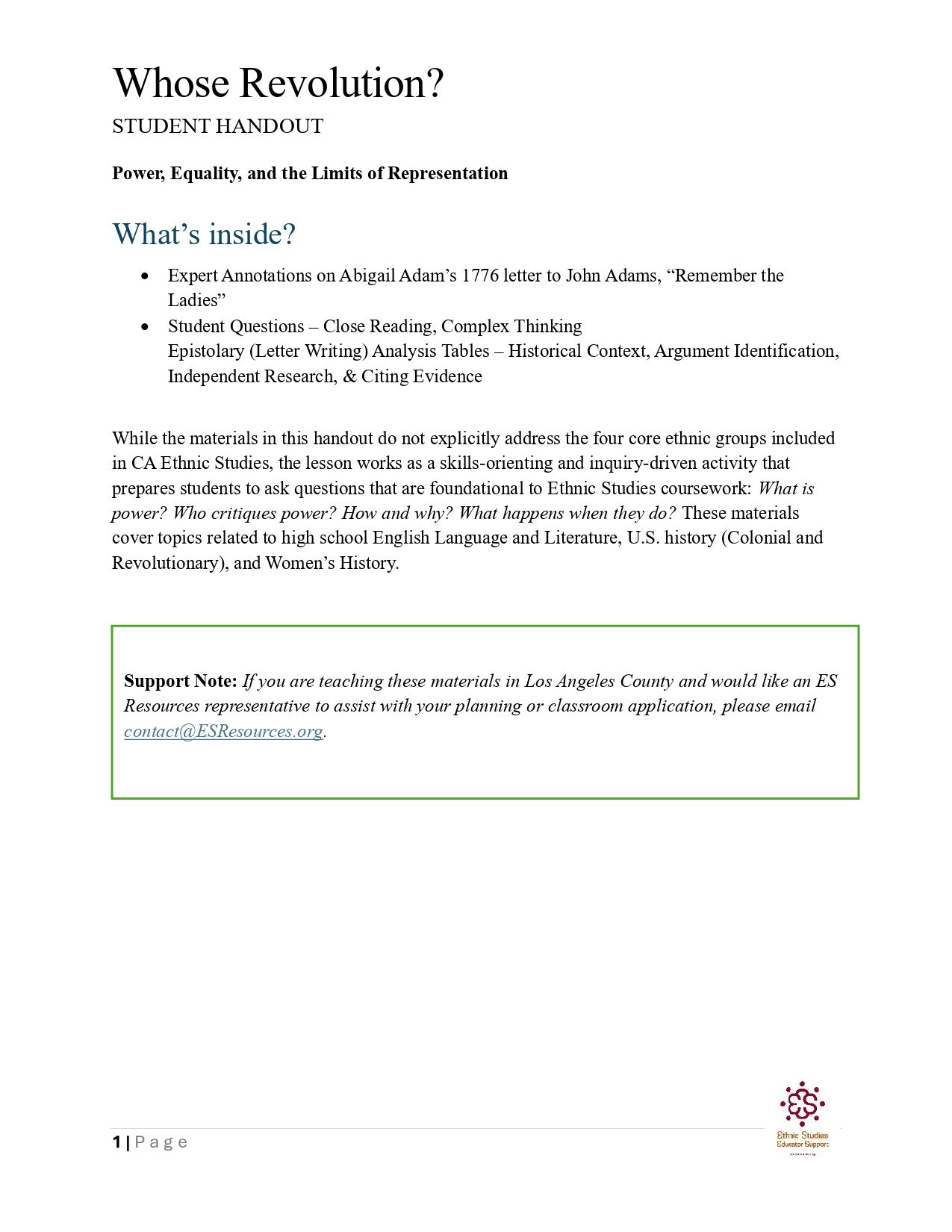
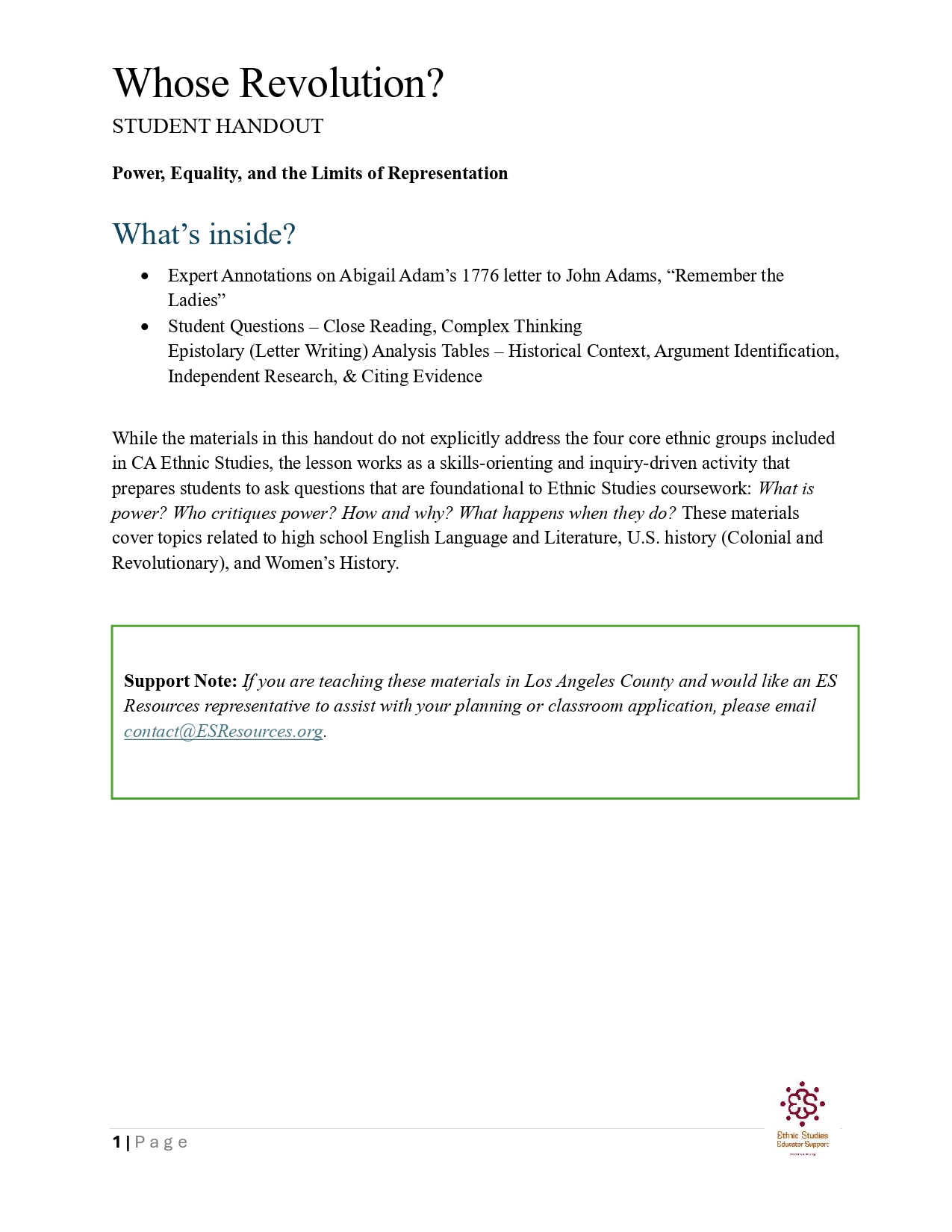
Whose Revolution? Abigail Adams’ “Remember the Ladies”
-
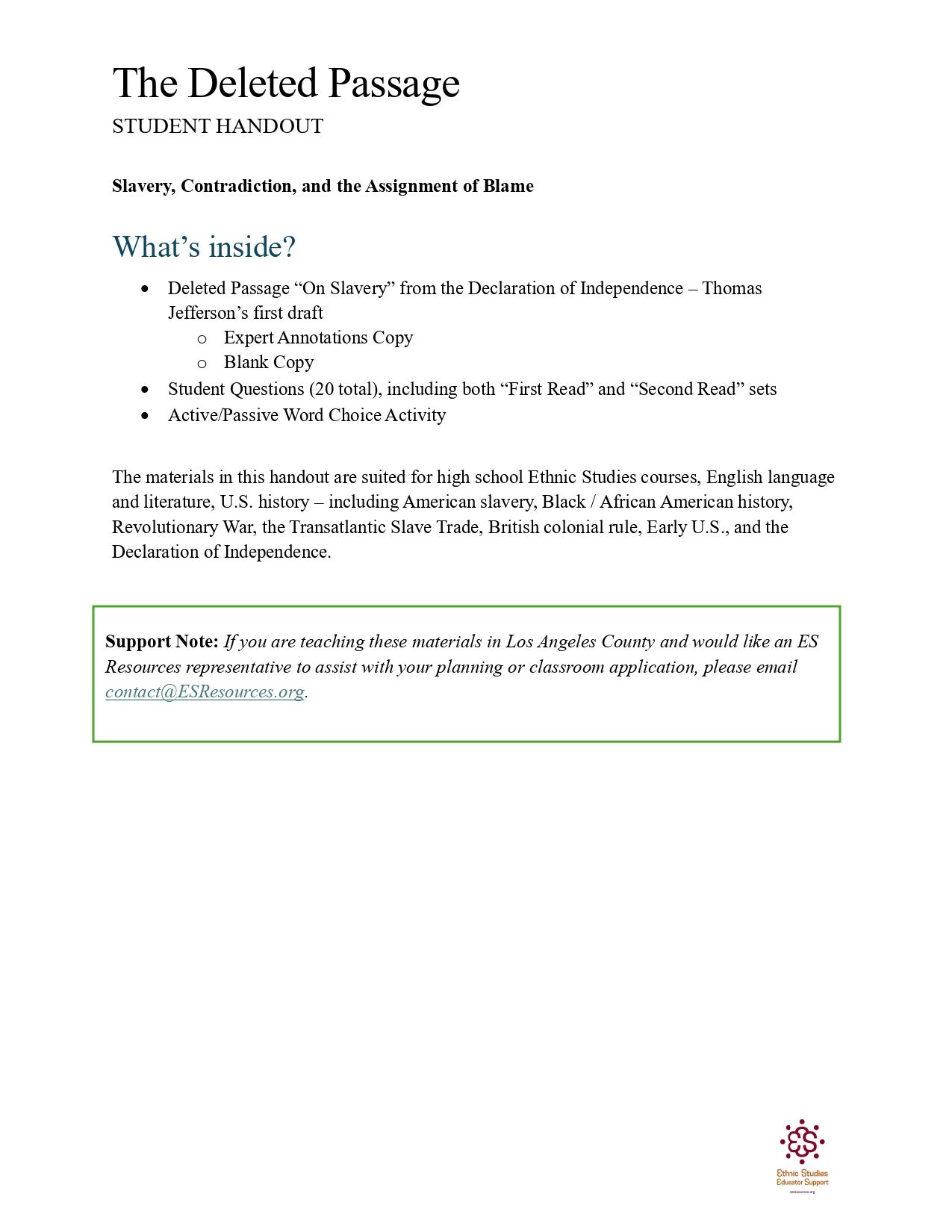
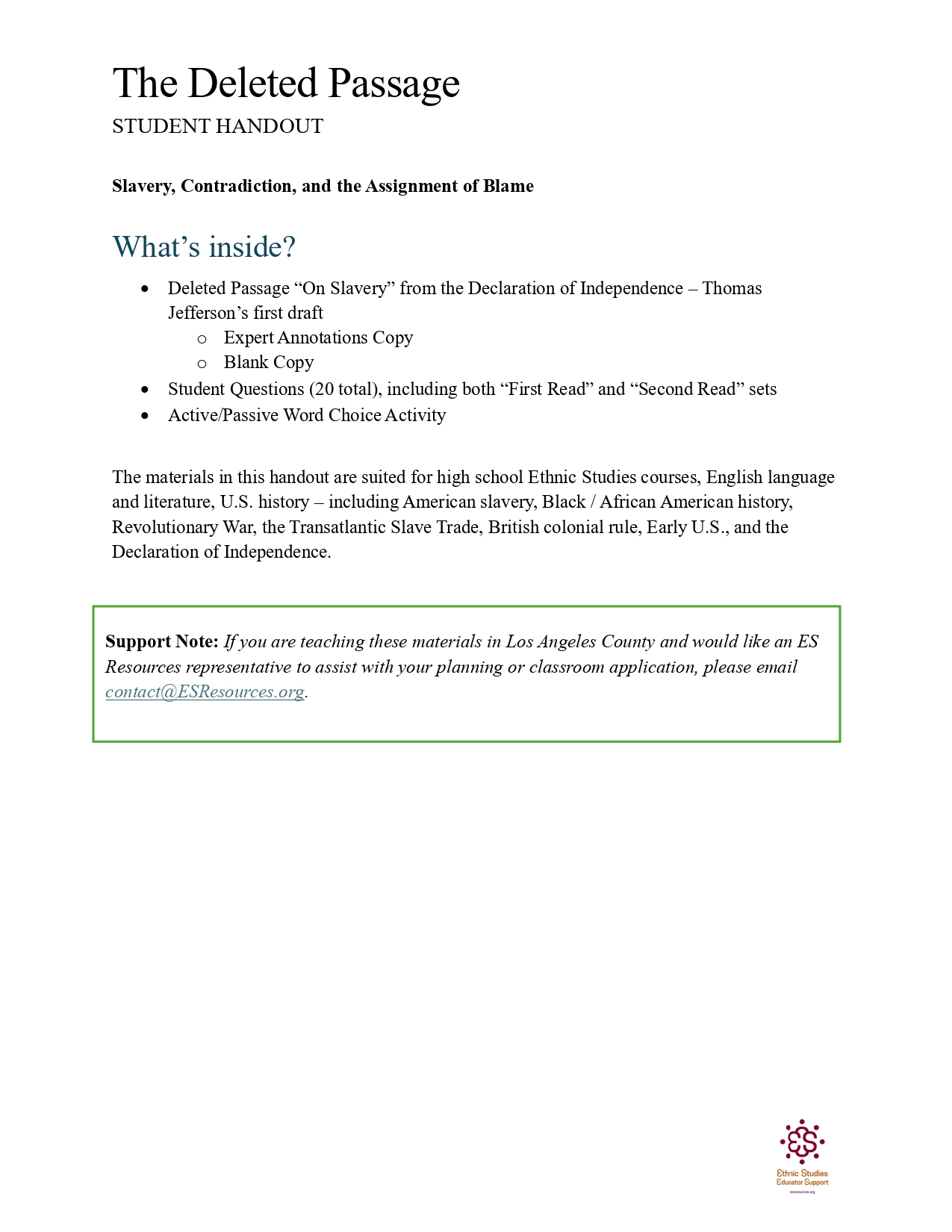
The “Deleted Passage” on Slavery
Members
Sign in to continue
Sign in to download this file. It's free to register, and we will bring you straight back to this page.
Or continue with email
No account? Register